
PROJECT INITIATORS
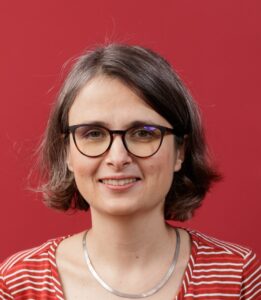
Magdalena Saryusz-Wolska, Culture Studies, Sociology, German Historical Institute in Warsaw, University of Łódź
Culture studies scholar and sociologist, director of the German Historical Institute in Warsaw, professor at the Institute of Contemporary Culture of the University of Łódź (currently on leave of absence). Her research interests include collective and cultural memory, visual history, media history. Author of, among others, ‘Microhistories of Memory. Remediating the Holocaust by Bullets in Postwar West Germany’ (Berghahn 2024) as well as academic articles in ‘Memory Studies’, ‘The Public Historian’ and ‘German Studies Review’.
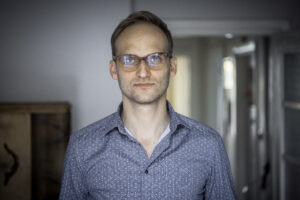
Łukasz Krzyżanowski, History, University of Warsaw
Assistant Professor in the Faculty of History, University of Warsaw and Claims Conference University Partnership in Holocaust Studies Lecturer. Trained at Jagiellonian University, University of Exeter, and the University of Warsaw. He has held scholarships from the University of Oxford, Yad Vashem, the Claims Conference, and the GHI Warsaw. His monograph ‘Ghost Citizens: Jewish Return to a Postwar City’, transl. Madeline G. Levine, was published by Harvard University Press in 2020 and received Sybil Halpern Milton Memorial Book Prize. His research is situated in the field of social history of 20th c. Central and Eastern Europe, primarily German occupation, the Holocaust and its immediate aftermath in Poland. He is a co-founder of the project Holocaust Mass Graves.

Anna Izabella Zalewska, Archaeology, History, University of Łódź
Works at the Institute of Archaeology at the Faculty of Philosophy and History, University of Łódź as a professor of the university. Her research interests include the material traces of the past in the present; history and methodology of archaeology; contemporary archaeology, especially war crimes and difficult everyday life; material memory of things and places; public history & archaeology; education for peace; critical heritage studies and heritage management. Author of, among others: ‘Teoria źródła archeologicznego i historycznego we współczesnej refleksji metodologicznej’ (2005); ‘Sobibór. The material remains of the former nazi death camp’ (2015); ‘The Materiality of Troubled Pasts’ (ed.) with J. Scott and G. Kiarszys (2017); ‘Krajobraz Wielkiej Wojny w świetle teledetekcji archeologicznej i źródeł historycznych’, with J. Czarnecki and G. Kiarszys (2019).
TEAM
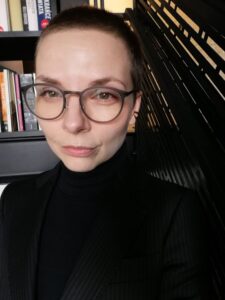
Katarzyna Anzorge, Culture Studies, University of Łódź, Justus Liebig University Giessen
PhD candidate at the University of Lodz and Justus Liebig University Giessen. She graduated from Brighton University in 2020 with an MA in Cultural and Critical Theory. In 2023, she was awarded the international competition for the ‘Cotutelle’ Project at the University of Lodz, making her a participant in the joint PhD program. She is preparing a PhD dissertation titled ‘Polish Holocaust Memory in the Era of Transformation: A Post-Dependence Perspective’. Her research interests include Holocaust memory, postcolonial theory, post-dependence studies, and memory studies. https://orcid.org/0000-0001-5566-9586
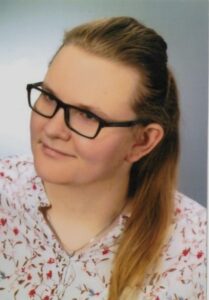
Angelika Bachanek, Archaeology, Maria Curie-Skłodowska University in Lublin
PhD student at the School of Humanities of the Maria Curie-Skłodowska University. She participated in archaeological research, including in the area of the former Warsaw Ghetto, contractor in NCN grants. Research interests: landscape studies, the use of GIS (Global Information Systems), ALS (Airborne Laser Scanning) in archaeology, the use of non-destructive research methods in archaeology, aerial and satellite archaeology and photogrammetry, contemporary archaeology.
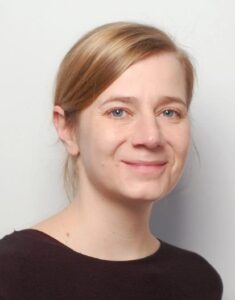
Zuzanna Dziuban, Culture Studies, Austrian Academy of Sciences
Zuzanna Dziuban is a senior postdoctoral researcher at the Institute of Culture Studies of the Austrian Academy of Sciences. She is the editor of ‘The ‘Spectral Turn’: Jewish Ghosts in the Polish Post-Holocaust Imaginaire’ (2019), ‘The ‘Forensic Turn’: Engaging Materialities of Mass Death in Holocaust Studies and Beyond’ (2017), and co-editor of special issues: ‘Forensik in Zeitschrift für Kulturwissenschaften’ (2019), ‘The Surviving Thing: Personal Objects in the Aftermath of Violence’ in the Journal of Material Culture (2020), and ‘Displaying Violence’ in the Austrian Journal of Historical Studies (2023). https://www.oeaw.ac.at/en/ikw/the-institute/staff/research-staff/zuzanna-dziuban
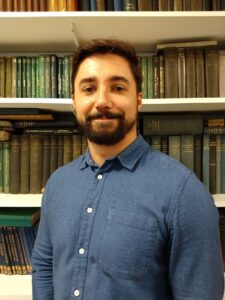
Janek Gryta, History, University of Southampton
Lecturer in Holocaust History at the University of Southampton. He is a cultural and social historian with particular interests in the Holocaust commemorations in Eastern Europe, nation-building, and the history of social consensus under Communism. He works on a monograph detailing the, often transnational, commemorative projects aimed at including the memory of the Jewish Holocaust suffering in Polish collective memory in the 1960s. https://www.southampton.ac.uk/people/656jyf/doctor-janek-gryta
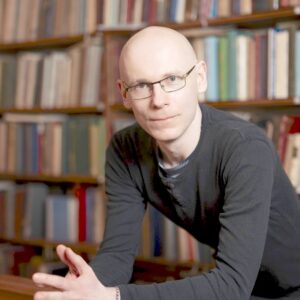
Tomasz M. Jankowski, History, Vilnius University
Historian specializing in Jewish studies, digital humanities, and historical demography. He completed postdoctoral fellowships at Vilnius University and the Friedrich-Christian-Lesser-Stiftung. Jankowski’s research focuses on Jewish social entanglements in East Central Europe from the late eighteenth to the twentieth century. His book, ‘Demography of a Shtetl’ (Brill, 2022), won the 2023 Gierowski and Szmeruk Award for the best book in Polish Jewish Studies. Jankowski is also the co-author of ‘Hebrew Polish Tango’ (Polin Museum, 2019) and ‘Complex Sides of Shared History’, an educational handbook on World War II for tour guides in Lviv. In recent years, he has been involved in documenting Jewish heritage for several institutions, including UNESCO, the Center for Urban History, and ESJF.
Kamil Karski, Archaeology, KL Plaszow Memorial Museum in Kraków
Archaeologist and museologist; since 2017 in the team preparing the commemoration of KL Plaszow in Krakow; focuses on the issues of contemporary archaeology – material remains of World War I (research of cemeteries and mass graves in the Lower San River region) and World War II, including the Holocaust (research of KL Plaszow, its sub-camps and labour camps of the Krakow district of the General Government); In his work he mainly uses the range of analytical tools of archaeology, complemented by heritage studies, spatial analysis and source analysis; since 2022 he has been involved in the project implemented by the Central Museum of Prisoners of War – Lamsdorf/Łambinowice. Archaeology of Memory. https://orcid.org/0000-0002-4887-1310
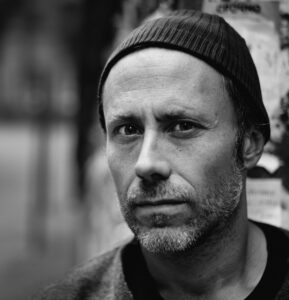
Kacper Lisowski
Graduate of The National Film School in Łódź and Andrzej Wajda‘s Masterschool of Directing in Warsaw. His work as DOP on documentaries include, among others: ‘Chemo’ by P. Łoziński, ‘The real end of the Cold War’ by J. Śladkowski, ‘You don’t know, how much I love you’ by P. Łoziński and ‘Ja, Rosiński’ by P. Kielar. Among his director‘s credits are: feature film ‘Stacja Warszawa’ – as co-director, short feature ‘Father’s Day’. He is also an author of a full-length documentaries: ‘World Champion’ 2017 and ‘Judges under pressure’ 2021 and leading director of a documentary series ‘Human to human’, 2022. Currently in preparation for a feature film debut ‘Psoty’. More at: https://www.filmpolski.pl/fp/index.php?osoba=1124912
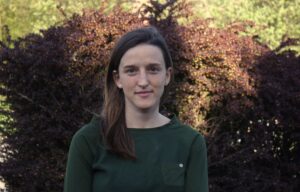
Julia Machnowska, History
Graduated from the University of Warsaw with an MA in History. Her academic interests revolve around the history of the Holocaust and post-war history with special focus on the fate of Jewish communal property in Poland. Between 2015 and 2023 she worked for the NGO Forum for Dialogue, coordinating programmes for students and teachers aimed at exploring and commemorating Jewish history in smaller towns across Poland. She collaborated with several institutions in the field of audio reportage, podcasts and oral history – such as Polish Radio, Yahad in-Unum, the Museum of Warsaw and the University of Warsaw.
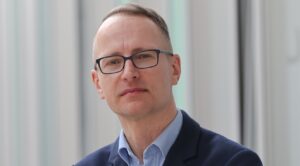
Krzysztof Malicki, Sociology, University of Rzeszów
Krzysztof Malicki, sociologist, Ph.D., Professor at the Institute of Sociological Studies at the University of Rzeszow. His work and researches focuses on the attitudes towards the past and Polish memory of the Holocaust.
Elżbieta Muter, Dendrology, University of Agriculture in Kraków
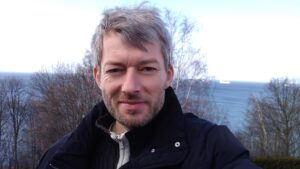
Grzegorz Myrda, Polish Academy of Sciences
M.Sc., research assistant in the Department of Historical Atlas (Tadeusz Manteuffel Institute of History, Polish Academy of Sciences). A graduate of the Faculty of Automatic Control, Electronics and Computer Science of the Silesian University of Technology. For over twenty years he has been dealing with issues related to Geographical Information Systems, and recently he has been focusing on the applications of GIS in historical research. Author of books on GIS and publications at the crossways of history and computer science.
Agnieszka Nieradko, Rabbinical Commission for Cemeteries, Zapomniane Foundation
Since 2007 Agnieszka Nieradko has worked at the Rabbinical Commission for Cemeteries, where she coordinates activities related to fencing, tidying up and commemorating Jewish cemeteries. She is a co-founder of the Zapomniane Foundation (2014), within which she co-creates the first Polish database of Jewish war graves (www.zapomniane.org). Since 2009 she has been involved in research on the so-called rural Holocaust, conducting field research, during which she collects testimonies of witnesses to the Holocaust and documents the presence of unmarked Jewish war graves throughout the country. www.zapomniane.org
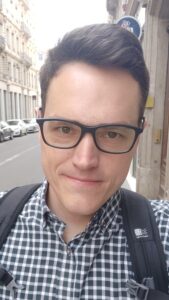
Tomasz Panecki, History, Geography, Polish Academy of Sciences, University of Warsaw
PhD, researcher at the Tadeusz Manteuffel Institute of History Polish Academy of Sciences (IH PAN) and a lecturer at the Faculty of Geography and Regional Studies, University of Warsaw. He holds a master’s degree in history (2012) and geography (2013), and a doctoral degree in geography (2018) with a specialization in cartography and geoinformatics. Since 2020 he has been a Chair of the Historical Atlas Department at IH PAN. His scientific interests concern the intersection between history of cartography and historical cartography, especially historic maps digital editions.
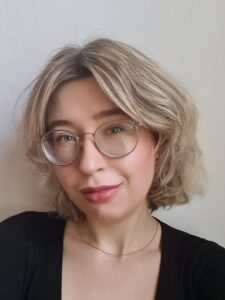
Diana Partel, History, University of Vienna
Diana Partel completed her Bachelor’s degree in Eastern and East Central European Studies and History at the University of Heidelberg. From April 2022 to September 2024, she worked as a student assistant on the project ‘Encyclopaedia of the Nazi Genocide of Sinti and Roma in Europe’ at the Research Centre on Antiziganism at Heidelberg University. As part of an internship and work-study position at the German Historical Institute Warsaw, she was involved in the project ‘Holocaust Mass Graves’. She is currently studying for a Master’s degree in Interdisciplinary East European Studies at the University of Vienna.
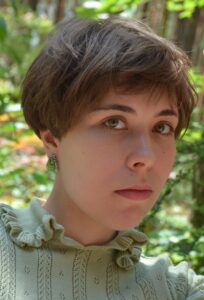
Marta Pawlińska, History, University of Warsaw
PhD student at the University of Warsaw’s Doctoral School of Humanities at the Faculty of History. Her PhD revolves around the experiences of Polish female forced laborers employed as domestic servants in German households from 1939 to 1945. Prior to her doctoral studies, she obtained both her master’s and bachelor’s degrees in History from the University of Warsaw. Her academic interests lie in the social history of the Second World War and the gender history of the 20th century.
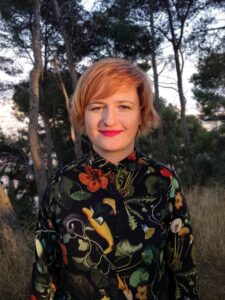
Aleksandra Szczepan, Culture Studies, Potsdam University, Jagiellonian University
Post-doc researcher in the ‘Adjustment and Radicalization: Dynamics in Popular Culture(s) in Pre-War Eastern Europe’ project at the Potsdam University, founded by the Leibniz Gemeinschaft. She holds a PhD in Comparative Literature from the Jagiellonian University in Kraków where she is a co-founder of the Research Center for Memory Cultures. She has also worked as a researcher and interviewer in oral history projects undertaken by the U.S. Holocaust Memorial Museum in Poland, Spain, and Kazakhstan. Her research interests include Holocaust literature and memory; oral history; and intersections between popular culture and populism.
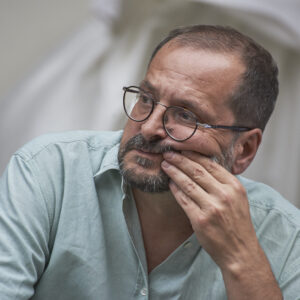
Wojciech Szumowski
Director, documentary filmmaker, producer. Born in 1961 in Bielsko-Biała. Graduate of the Directing Department of the Film School in Łódź, active in the film and television industry for over 30 years. Author of many awarded and appreciated documentaries, screened on TV channels all over the world. Winner of numerous awards at festivals in Warsaw, Lodz, Cervino, Sichuan and Vancouver, twice honoured with the Grand Press Award in 2010 and 2013. Independent filmmaker and director. Previously producer and director for TVN and Discovery Historia TVN, and in 2000-2001 head of the documentary department at TVP 2 where he created the concept and introduced the documentary film strand ‘Polska bez fikcji’.
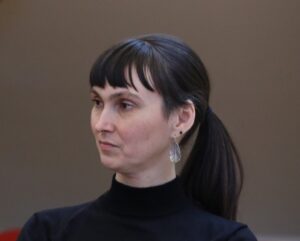
Annika Wienert, Art History, German Historical Institute in Warsaw
Art historian working at the German Historical Institute in Warsaw. In 2014, she earned her PhD from Ruhr University Bochum with a doctoral dissertation on the architecture of the Nazi extermination camps in Belzec, Sobibor, and Treblinka (‘Das Lager vorstellen. Die Architektur der nationalsozialistischen Vernichtungslager’, 3. rev. ed. Berlin 2018. Polish translation: ‘Architektura nazistowskich obozów zagłady w Bełżcu, Sobiborze i Treblince’, Lublin 2022). In 2021, she was a visiting professor at the Fritz Bauer Institute in Frankfurt/Main. Recently, her research focused on space-related approaches in Holocaust Studies as well as planning and building in occupied Poland. Her newest publication is ‘Space in Holocaust Research. A Transdisciplinary Approach to Spatial Thinking’, Berlin 2024, which she co-edited with Janine Fubel and Alexandra Klei. https://orcid.org/0000-0002-9336-8378
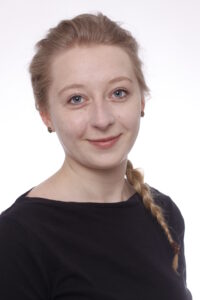
Aniela Wrzesińska, Polish Academy of Sciences
Geoinformatics engineer in the Department of Historical Atlas (Tadeusz Manteuffel Institute of History, Polish Academy of Sciences). A graduate of the Faculty of Geoinformation, Geographical and Geological Sciences of the Adam Mickiewicz University. Since the beginning of her studies, she has been dealing with Geographical Information Systems, currently creating map applications and working with historical data from a technical perspective.
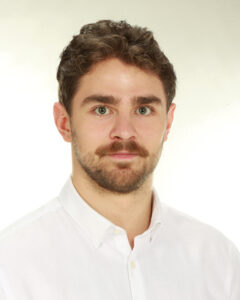
Bruno Zwierz, History, University of Warsaw
PhD student at University of Warsaw’s Doctoral School of Humanities at the American Studies Center, having completed his Master’s degree at the university’s Faculty of History. His current research examines the trophy-taking practices employed by 20th-century US soldiers, exploring conflicts ranging from the Second World War to the War on Terror. Zwierz’s scholarly pursuits extend to diverse areas, encompassing the historiography of violence, the socio-cultural dimensions of war, and the dynamics surrounding the dehumanization of individuals and the anthropomorphization of animals.
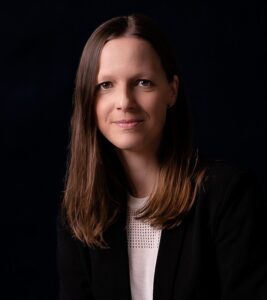
Iwona Żuk, Sociology
She holds a Master’s degree in Sociology from the University of Rzeszów. Since 2012, she has been leading IPSYLON Social Research Studio, specializing in the design and implementation of quantitative and qualitative research. Her expertise includes developing research frameworks, conducting interviews, performing data analysis, and preparing comprehensive reports. A part of her projects focuses on collective memory, including how Poles remember and interpret the Holocaust.