
Holocaust remembrance focuses on camps and ghettos in large cities. This is where visitor tours arrive and major commemorations are staged. However, Holocaust history researchers point out that about a quarter of all victims, particularly in the provinces, were killed by bullets – they were shot in their cities, towns and villages and on their outskirts. The exact number of Holocaust victims whom the Germans murdered in this way is not known. Many such murders accompanied the liquidation of ghettos during Operation Reinhardt, but its course is poorly recognised. We know little about the direct perpetrators, the helpers, the ways in which the killing sites were chosen, the obliteration of traces, or the post-war history of the burial sites.
In 2023, a group of researchers representing various disciplines and academic centres in Poland, Germany, Austria, the UK and Israel came together to systematise this knowledge. We have initiated an interactive map that illustrates the dispersed nature of the Holocaust and shows the locations of the mass burial sites of Jews, the Sinti and Roma who were murdered during the Second World War. We want to draw attention to the fact that the Holocaust is not just about the industrial-scale killing in Auschwitz, Treblinka, Majdanek, Belzec, Sobibor or Chelmno and about the mass suffering in the largest ghettos in Warsaw, Lodz, Krakow, Lublin or Bialystok. There are also countless other places in today’s Poland where the victims were killed, as well as in Ukraine, Belarus or the Baltic States. If for each of them there were a signpost showing the way to it, there would be roads winding through Central and Eastern Europe with signs leading to Holocaust sites.
Thanks to the support of the Foundation Remembrance, Responsibility and Future, the Zeit Stiftung Bucerius Foundation, and the Fritz Thyssen Foundation, we have mapped all the mass graves of Holocaust victims in the General Government (the part of occupied Poland that was not incorporated into the Reich) that we have been able to identify. Our search was guided by the “USHMM Encyclopedia of Camps and Ghettos, 1933–1945”, as well as additional information gathered from Polish-language literature and sources. On this basis, we have compiled a database, which we make available in an open repository. In most of the graves marked on the map rest the victims of Operation Reinhardt. This was Nazi Germany’s plan, carried out from April 1942 to November 1943, aimed at exterminating all Jews in occupied Poland. In many places, this did not just mean deportation operations and accompanying shootings, but also the killing of those in hiding in the months following the deportations.
Thanks to the support of the Foundation Remembrance, Responsibility and Future, the Zeit Stiftung Bucerius Foundation, and the Fritz Thyssen Foundation, we have mapped all the mass graves of Holocaust victims in the General Government (the part of occupied Poland that was not incorporated into the Reich) that we have been able to identify. Our search was guided by the “USHMM Encyclopedia of Camps and Ghettos, 1933–1945”, as well as additional information gathered from Polish-language literature and sources. On this basis, we have compiled a database, which we make available in an open repository. In most of the graves marked on the map rest the victims of Operation Reinhardt. This was Nazi Germany’s plan, carried out from April 1942 to November 1943, aimed at exterminating all Jews in occupied Poland. In many places, this did not just mean deportation operations and accompanying shootings, but also the killing of those in hiding in the months following the deportations.
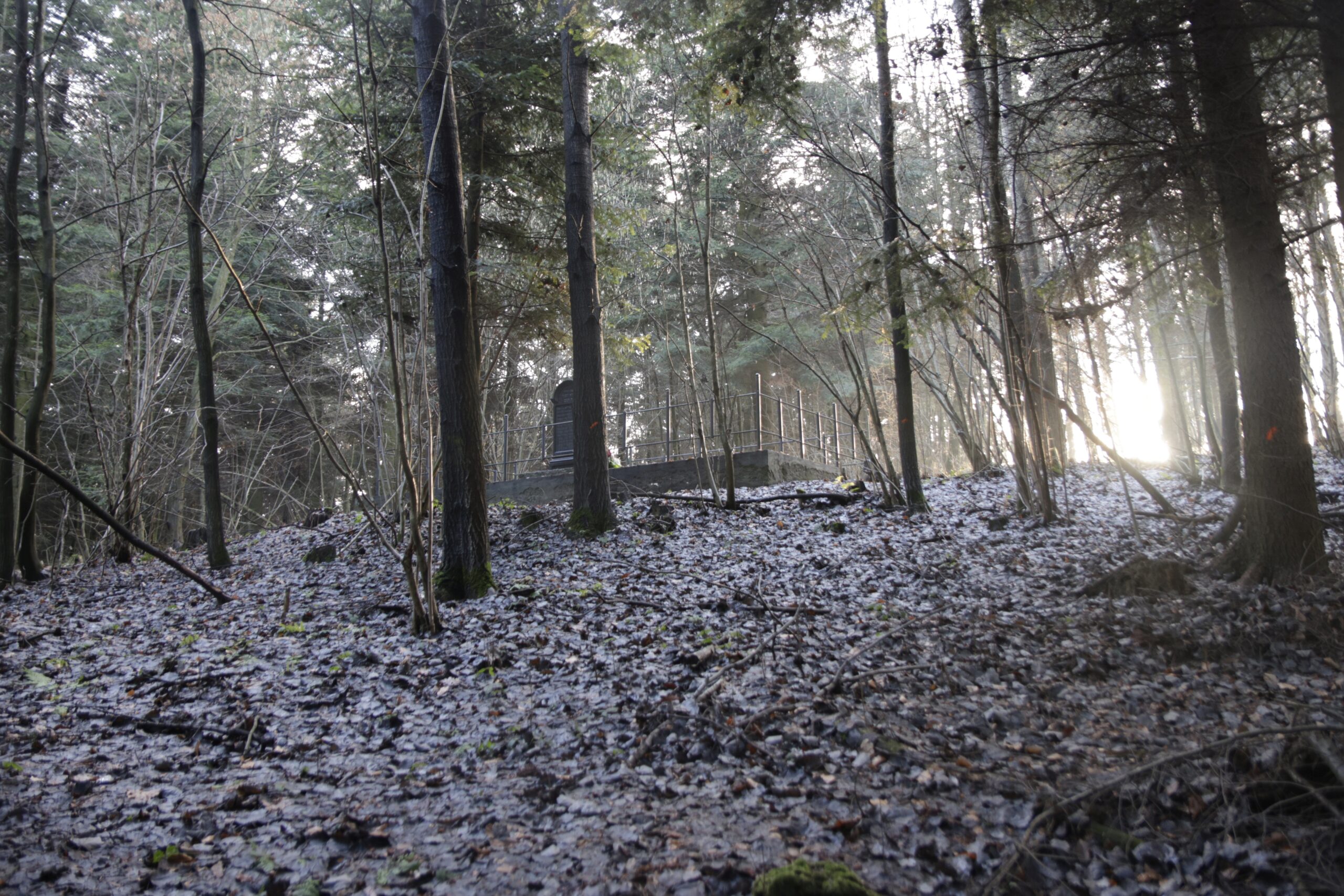
The description of each place on the map includes basic information known about its history and commemoration, and the project team are still working to add more information. All sites can be displayed against a contemporary map, as well as historical ones – pre-war and post-war. For selected sites – at the current stage of the project these are mainly areas of contemporary south-eastern Poland – we are including additional information: archival sources and aerial photographs. We will be adding them gradually. In addition to the sites included in the map, there are many unmarked places where the remains of the victims are buried. The search for them is carried out in Poland by the Zapomniane Foundation.
We are aware that the presented map is incomplete and requires constant additions and corrections. If you have information about mass graves of Holocaust victims not included in the map or wish to correct it, please contact us.
The interactive map is only one of several elements of the project. A team of researchers make field trips to collect information about mass graves of Holocaust victims on site – at this stage, these activities are concentrated in the area of the Beskid Niski. All research is non-invasive, as Jewish law (Halakha) forbids disturbing the peace of the dead, especially excavating their resting places. We talk to witnesses of past events – above all people who can tell us something about the post-war history of the places where the remains of the victims are buried. It is becoming increasingly difficult to find witnesses who remember the wartime years. We carry out archive queries looking for sources relating to the history of mass murders of Jews, the Sinti and Roma. We collect material that documents the exhumations of victims, the securing of graves, the construction (and reconstruction) of monuments and anniversary memorials. We recreate the history of the sites with graves on the basis of, among other things, archival aerial photographs (wartime and post-war), analysis of natural conditions (e.g. tree growth) and data obtained from the Digital Terrain Model (known as LiDAR). We talk to local historians – professional and amateur – as well as local activists. We also conduct educational activities for teachers and tourist guides.
The interactive map is only one of several elements of the project. A team of researchers make field trips to collect information about mass graves of Holocaust victims on site – at this stage, these activities are concentrated in the area of the Beskid Niski. All research is non-invasive, as Jewish law (Halakha) forbids disturbing the peace of the dead, especially excavating their resting places. We talk to witnesses of past events – above all people who can tell us something about the post-war history of the places where the remains of the victims are buried. It is becoming increasingly difficult to find witnesses who remember the wartime years. We carry out archive queries looking for sources relating to the history of mass murders of Jews, the Sinti and Roma. We collect material that documents the exhumations of victims, the securing of graves, the construction (and reconstruction) of monuments and anniversary memorials. We recreate the history of the sites with graves on the basis of, among other things, archival aerial photographs (wartime and post-war), analysis of natural conditions (e.g. tree growth) and data obtained from the Digital Terrain Model (known as LiDAR). We talk to local historians – professional and amateur – as well as local activists. We also conduct educational activities for teachers and tourist guides.
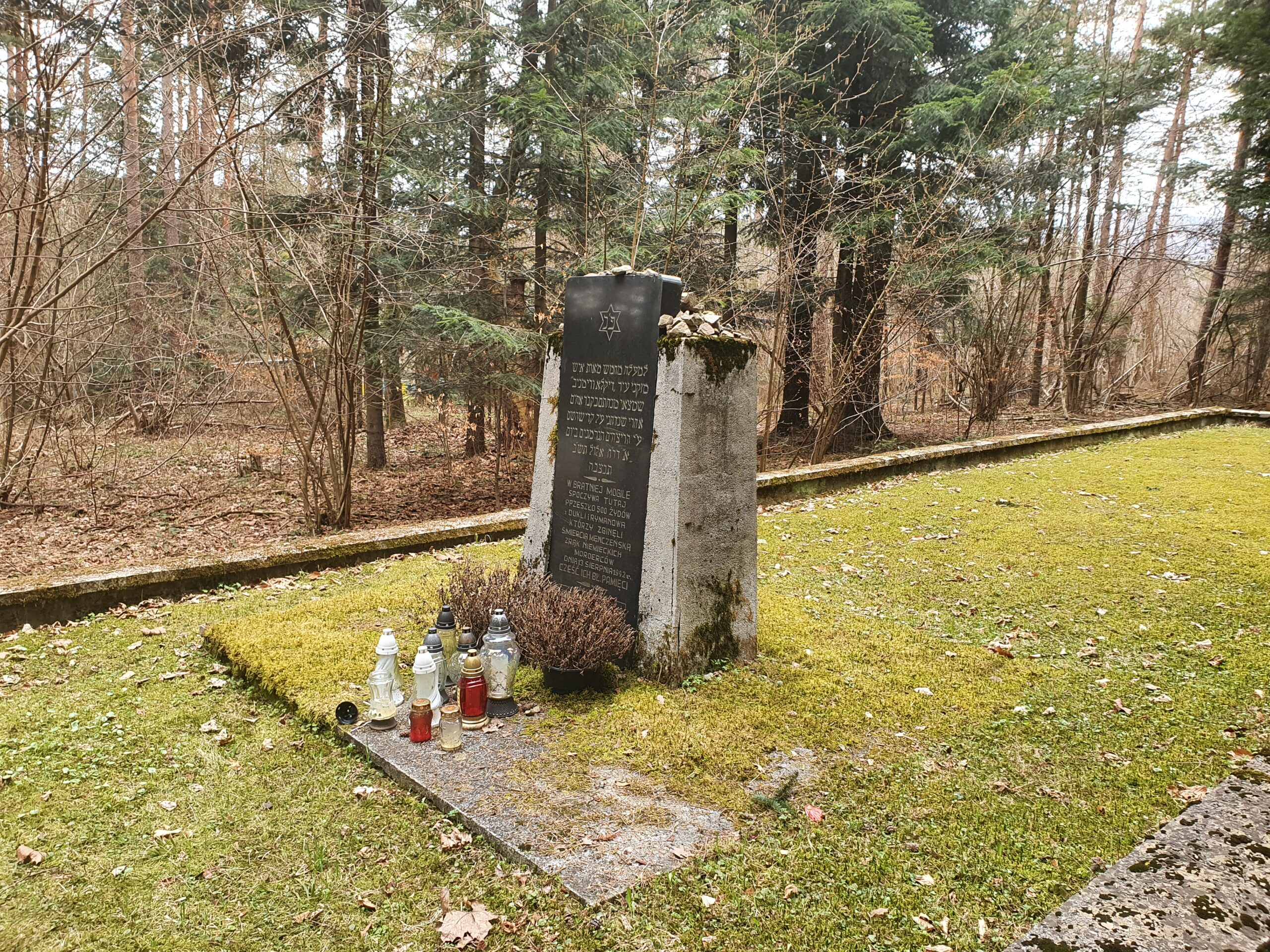
We are often asked what a mass grave is. Polish law does not regulate this issue, but since 1996 the International Criminal Tribunal for the former Yugoslavia used a working definition that included at least three victims per grave for it to be considered a mass grave. For graves of victims of the Second World War, similar definitions have not been developed. In 2020, the UN Special Rapporteur on extrajudicial, summary or arbitrary executions accepted a proposal by researchers at Bournemouth University that it was not the number of bodies that should be the criterion (only the distinction between individual and mass graves is used), but doubts about the circumstances of the victims’ deaths, in particular whether they were victims of a crime. Moreover, some of the currently active research teams stress that mass graves are distinguished by the common circumstances of the victims’ death and their makeshift – i.e. illegal and not following burial customs – method of internment (e.g. absence of coffins). Whichever criteria one adopts, the sites that are the main focus of this project fit all the working definitions of mass graves.